Hardware Store Marketing in 2026: What’s Actually Changed—and What Smart Owners Are Do
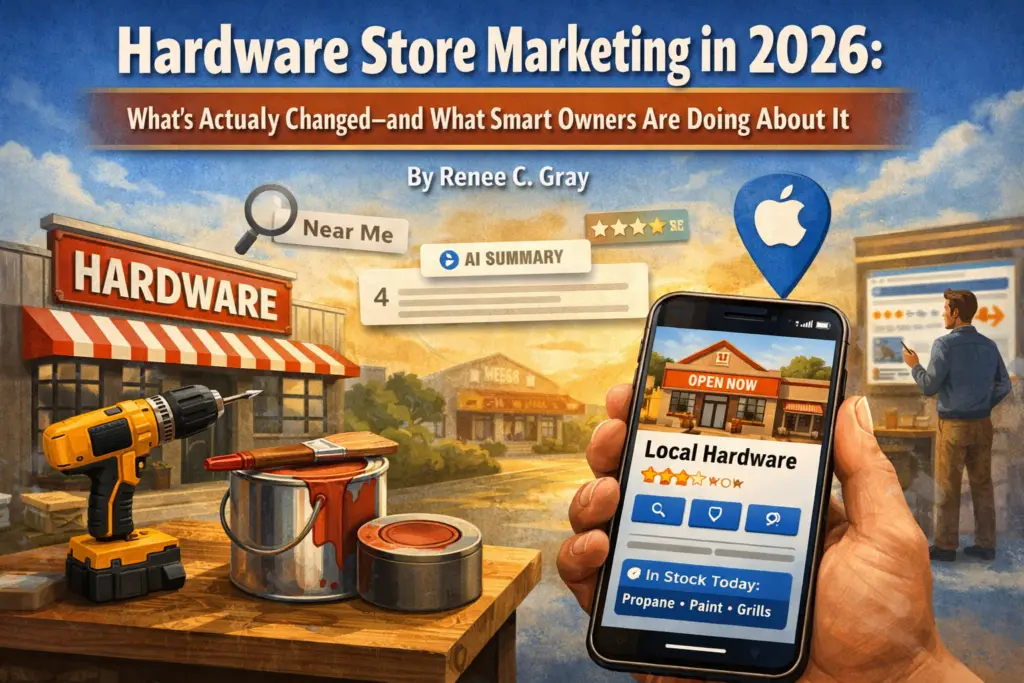
ing About I By Renee C. Gray | Hardware Store Marketing Experts (HSME) If marketing feels harder than it used to, it’s not your imagination. In 2026, hardware store owners aren’t competing just with the store down the road. You’re competing with convenience, assumptions, and algorithms that now decide what customers see before they ever think about walking through your door. The biggest shift isn’t a new platform or tool. It’s this: customers decide where to shop earlier than ever—and often without clicking a website at all. That sounds intimidating, but it also creates opportunity. The stores that understand how modern discovery works are winning back control, even in crowded or slow markets. Let’s talk about what’s really changed—and what that means for your store. The Quiet Death of the “Website-First” Strategy For years, the advice was simple: get people to your website. In 2026, that advice is incomplete. Today, most customers form an opinion of your store without ever visiting your site. They see your Google listing, your reviews, a few photos, maybe a product result—and make a decision right there. This doesn’t mean your website doesn’t matter. It means your profiles now act as your first impression, and your website becomes the confirmation step. Smart hardware stores have adjusted by treating Google Business Profile and Apple Business Connect like digital storefronts, not afterthoughts. They keep hours accurate, photos fresh, and information clear—because that’s where customers are actually looking. Why Google and Apple Now Control Local Foot Traffic Search engines aren’t just directories anymore. They’re decision engines. Google’s AI-driven summaries and Apple’s map-based searches are designed to answer questions fast: Is this store open? Can they cut keys? Do they carry propane? Can I trust them? If your information is incomplete or outdated, the algorithm fills in the blanks—or worse, favors a competitor who made it easier. The stores that are thriving in 2026 understand that visibility isn’t about rankings alone. It’s about removing friction. Clear categories, accurate services, consistent information across platforms, and real photos send trust signals that algorithms—and customers—respond to. Proof Beats Promises: Why “We Have It” Isn’t Enough Anymore One of the biggest behavior changes we see is this: customers don’t want to ask if you have something. They want to see that you do. Local product visibility—especially for paint, propane, grills, seasonal tools, and fast-moving items—has become a deciding factor. When shoppers see in-stock products tied to a local store, it removes uncertainty and shortens the decision cycle. This is why more independent stores are leaning into tools like Google Merchant Center. Not because they want to become eCommerce giants—but because showing inventory builds confidence. In 2026, confidence is currency. Trust Is the New Marketing Budget As regulations tighten and platforms crack down, shortcuts around reviews and engagement are becoming riskier—and less effective. Customers can spot inauthentic marketing instantly. What they respond to instead is consistency: real reviews, honest responses, visible staff, and content that reflects what actually happens inside the store. The most effective marketing we see doesn’t feel like marketing at all. It feels like a knowledgeable employee helping someone solve a problem. That’s why short videos, quick tips, staff spotlights, and community moments continue to outperform polished ads. They remind customers why they prefer a local store in the first place. The Real Challenge Isn’t Tools—It’s Sustainability Most owners don’t fail at marketing because they don’t care. They fail because the approach isn’t realistic. The stores that succeed in 2026 don’t try to do everything. They choose a few high-impact habits and protect them: This approach compounds over time. It also respects the reality that your priority is running a store—not becoming a marketer. A More Realistic 90-Day Focus Instead of chasing every tactic, smart owners focus on momentum: First, clean up the basics—profiles, email deliverability, review processes.Then, improve visibility by showing products, posting consistently, and answering local questions.Finally, refine what’s working and let go of what isn’t. Marketing in 2026 rewards clarity and consistency far more than complexity. The Takeaway for Hardware Store Owners The goal isn’t to outspend big-box stores. It’s to out-communicate uncertainty. When customers can quickly see that you’re open, trustworthy, knowledgeable, and stocked, they choose you. Not because of a trick or a trend—but because you made their decision easy. That’s what modern hardware store marketing really is. A Final Word from HSME At Hardware Store Marketing Experts, we help independent stores translate what they already do well—service, expertise, community—into digital visibility that actually drives foot traffic. If marketing feels overwhelming or disjointed, you don’t need more tactics. You need a clearer strategy built around how customers make decisions today. We’re here to help when you’re ready.
Hardware Store Marketing in 2026: What’s Actually Changed—and What Smart Owners Are Do Read More »